I see literally hundreds of dolls at yard sales every week. Lots of them look like Barbie. This one looks to be on the opposite end of the doll spectrum.

I see literally hundreds of dolls at yard sales every week. Lots of them look like Barbie. This one looks to be on the opposite end of the doll spectrum.
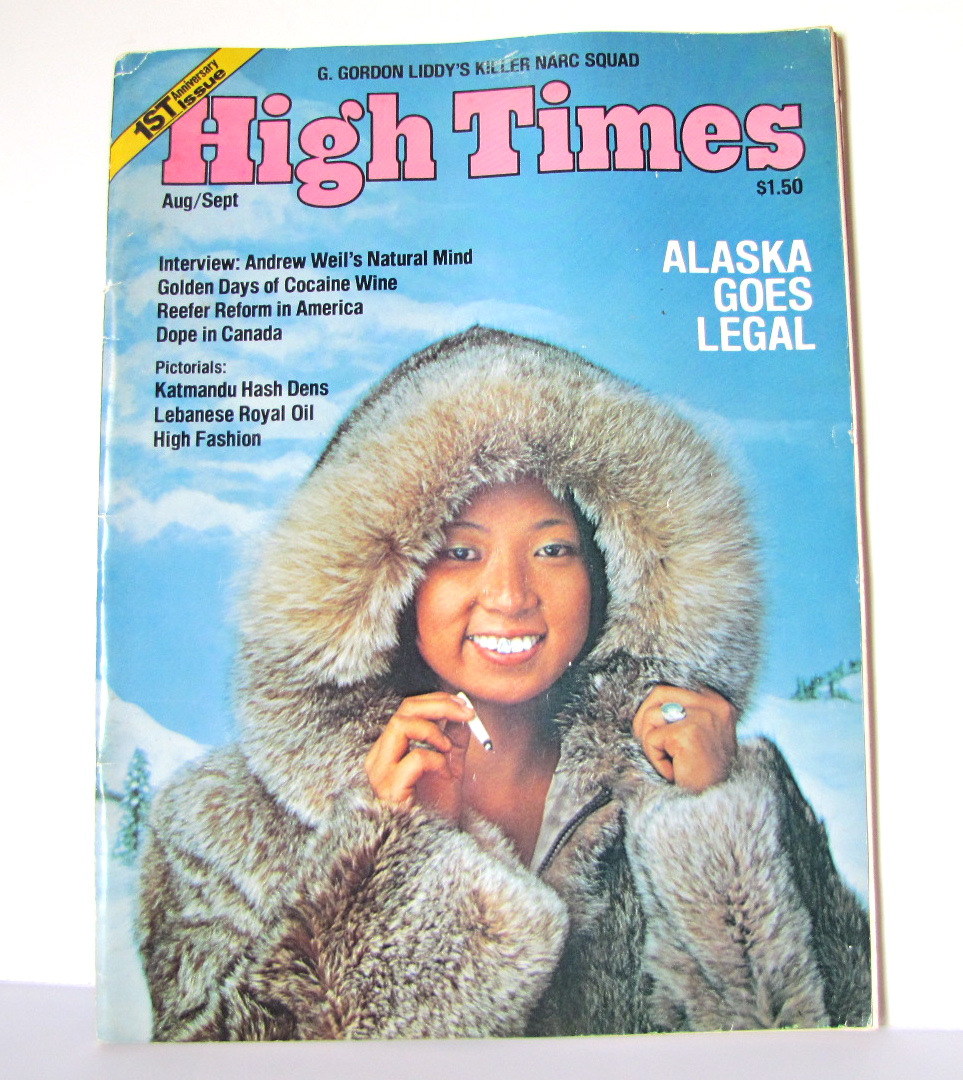
Well, apparently a lot of people must know about it. Come to find out, the magazine has been around since 1974, and is still being published. I had no idea. When I picked it up from the yard sale table, I thought it must be a travel magazine, and I guess you could say it is. It’s just not the type of traveling I do.
Finding beer cans at yard sales is only slightly unusual, but finding one of these beer cans at a yard sale is VERY unusual. The former owner of this can was selling a tub of fairly recent commemorative Coke bottles and beer cans. After my inquiry about older cans elicited the “brake fluid” response, I ended up in his basement, and the rest, as they say, is history. 🙂
Here’s a link to the Brewery Collectibles Club of America. The club is always looking for people who enjoy scouring the countryside for these kinds of hidden treasures.

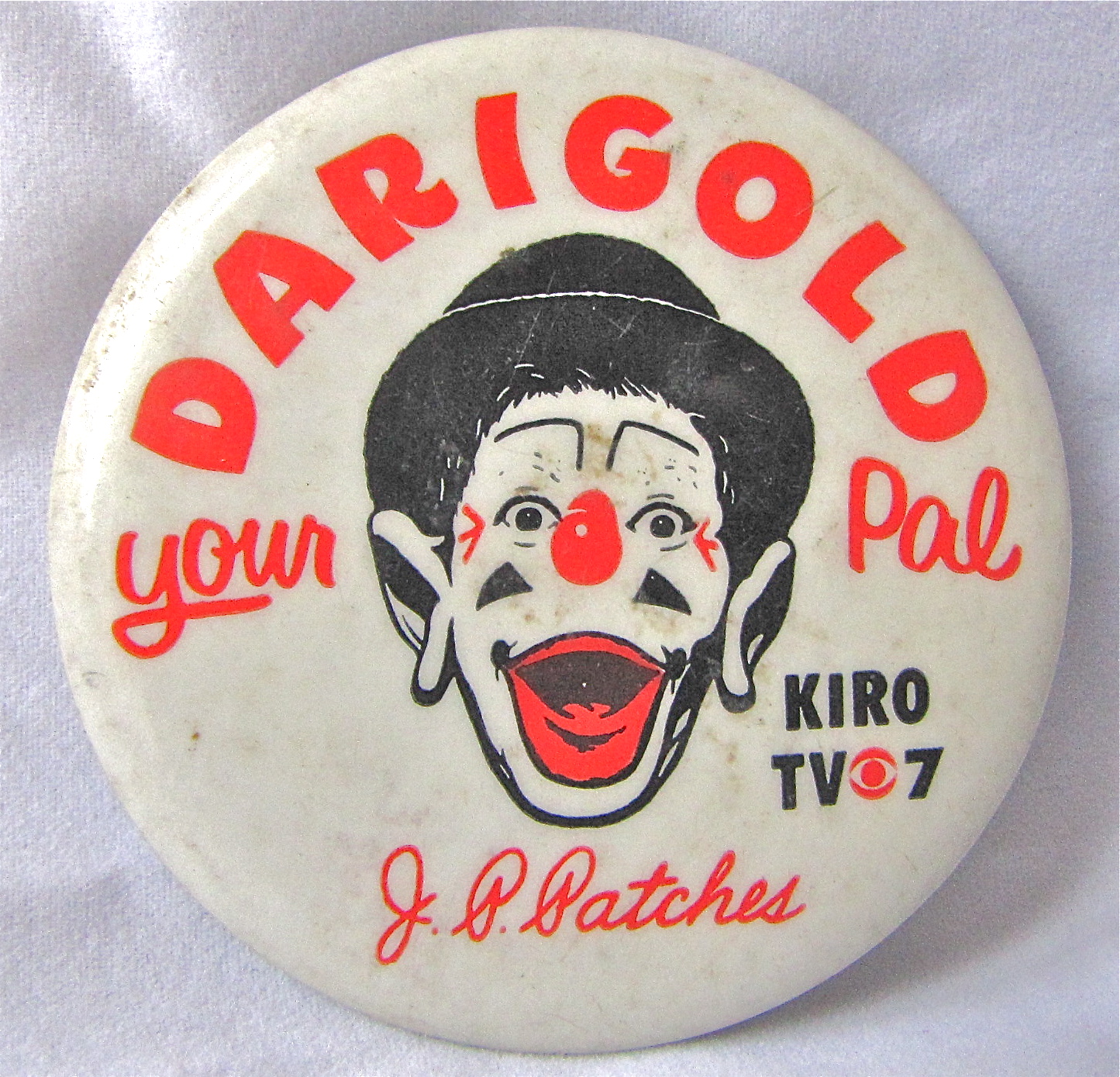
Julius Pierpont Patches debuted on Seattle’s KIRO TV Channel 7 in 1958. The show was live and ran for 23 years until 1981. DARIGOLD is a Seattle-based dairy coop that must have sponsored the J.P. Patches show. Can’t you just see the kids sitting in front of the television drinking their chocolate milk and wearing their J.P. Patches pins.
Here’s the link to the full story of Seattle’s iconic TV clown:
http://en.wikipedia.org/wiki/J._P._Patches
Vince Edwards starred as the dashing young Dr. Ben Casey for 6 seasons on CBS TV in the early 1960s. Sam Jaffe played Dr. David Zorba, Dr. Casey’s mentor. I would guess that a young teenage girl proudly wore this image of Vince, her favorite TV heartthrob.

Here are the cerebral opening credits of Ben Casey:
The bleeper ball emitted a signal that allowed the golfer to track it and recover it via a mobile receiver. The golfer who spent good money for it probably needed a different kind of bleeper after the ball splashed down in the middle of the pond.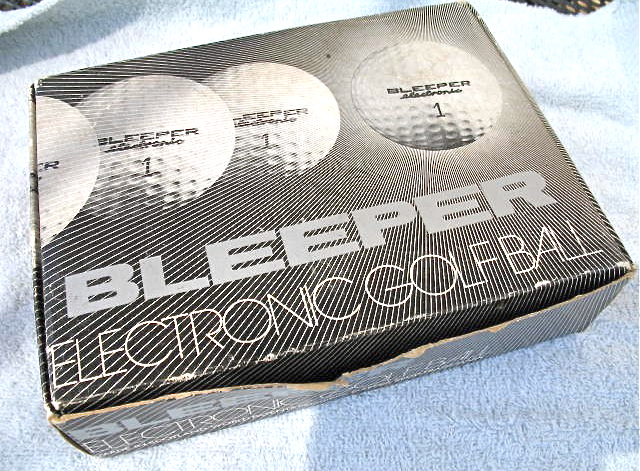
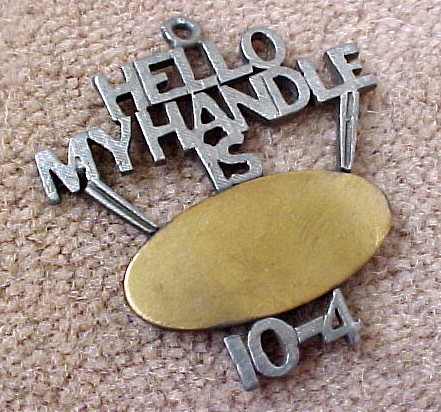
The 1970s’ CB craze seemed to die out as fast as it had exploded. I am happy to say I never had a handle, or I might have had to wear one of these around my neck.
Click the link to listen to one of the most unlikely songs ever to reach the top of the Billboard Pop charts. C.W. McCall’s ode to the road went to #1 the week of January 10, 1976.
Hard to know what to make of this large wooden hand mounted on a faux marble base. Suffice to say it is the oddest trophy I have ever come across. Someone received this for “FIRST PLACE” something. Wonder if they had second thoughts about finishing first.
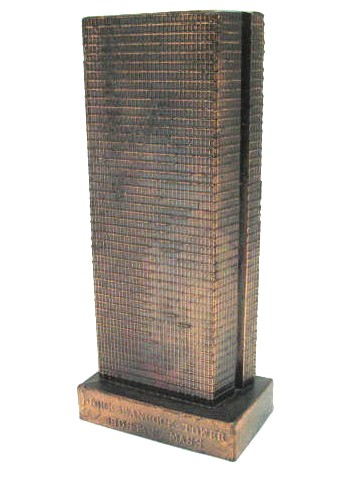
Small replicas of such architectural structures as The Statue of Liberty, The Empire State Building, The Washington Monument, and the Eiffel Tower are fairly easy to find, and are normally of nominal value. Apparently, replicas of Boston’s John Hancock Tower are not so easy to find and are quite a bit more valuable than the norm. Maybe there were only a handful made. I don’t know. Or maybe the replica derives its value from the fact that that the actual John Hancock Tower was so severely flawed during construction that 500-pound windows began falling from it before its construction was even completed. Adjacent streets and sidewalks were roped off, and large sheets of black-painted plywood were put in place to cover the holes until that design flaw, and others, could be resolved. Hence the nickname “Plywood Palace.”
Here’s a link to a wonderful 1995 Boston Globe editorial that chronicles the early troubles of the Tower.
http://www.pulitzer.org/archives/5826
btw: I purchased the replica for $1 at a yard sale, and sold it for $200+ on line. Who knew?
 Odd Yard Sale Finds